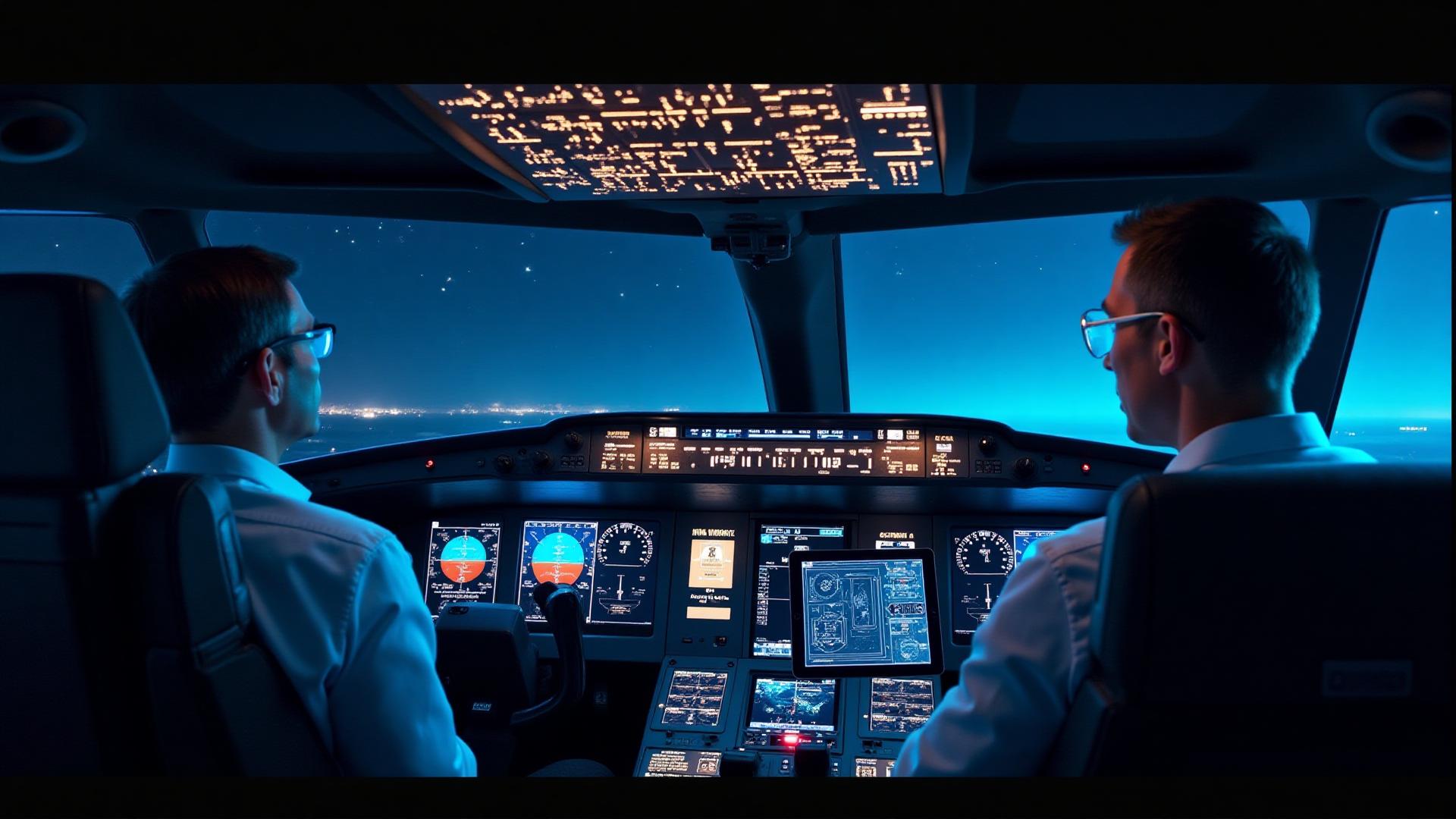
Before I ever sat in the right seat of a Challenger 350, I spent years working in tech, building servers, debugging problems, automating tasks, designing workflows, and thinking in systems.
Turns out, that background made me a better pilot than I ever expected.
A modern cockpit is a system-of-systems.
A pilot is, in many ways, a systems engineer in motion.
Troubleshooting Without Panic
When you've debugged servers at 3am, an unexpected ATC reroute isn't nearly as intimidating.
Tech taught me:
- stay calm
- isolate variables
- check logs (or in aviation, instruments and procedures)
- try a fix
- evaluate
- iterate
The discipline is the same.
Mental Models Prevent "Stack Overflow" Moments
In aviation, task saturation is the killer of performance.
Tech trained my brain to:
- build mental schemas
- expect dependencies
- understand failure modes
- anticipate bottlenecks
These skills are priceless when you're entering busy airspace or briefing a complex visual approach.
Automation Is a Partner, Not a Crutch
Understanding how systems work helps me respect automation without over-trusting it.
Autopilot isn't magic; it's a set of rules.
VNAV isn't intuition; it's logic.
A database approach isn't creativity; it's precision.
Respecting automation keeps you ahead of the airplane instead of behind it.
Organization = Safety
My tech background also made me obsessively organized:
- flight logs
- Nextcloud systems
- n8n automations
- personal checklists
- repeating workflows
Organization reduces mistakes.
Mistakes reduce stress.
Less stress increases safety.
Tech Mind, Pilot Heart
Aviation gave me purpose.
Tech gave me a mindset.
Together, they made me a pilot who can handle pressure, think clearly, and adapt quickly.