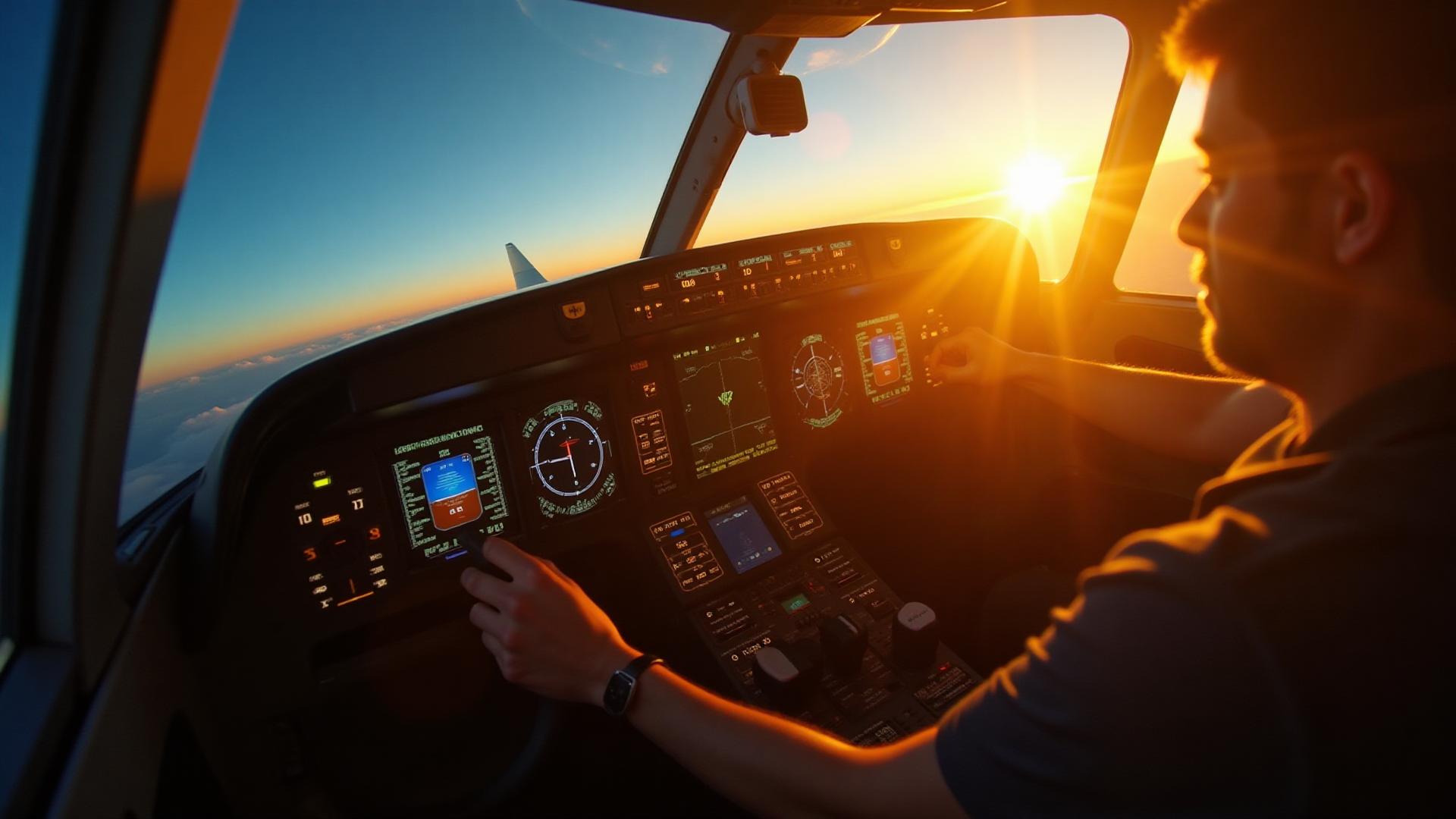
There's a moment every pilot knows: the micro-freeze. It's the split-second when something unexpected happens: a warning light, a sudden runway change, or a thud you're not supposed to hear, and the nervous system hesitates before the brain catches up.
I've had a few of those moments. I've frozen on the radios after a long time off, I've stumbled through unexpected visual approaches, I've been behind the airplane when fatigue caught up with me, and I've been surprised enough to momentarily lose situational awareness.
What I've learned is this: adaptability isn't a talent. It's a trained response.
Flying forced me to build that muscle.
When you sit in the cockpit at 45,000 feet, you must navigate uncertainty with calm precision. Not because it's easy, but because passengers, colleagues, and the airplane itself depend on it. And what's surprised me is how deeply those cockpit lessons apply to everyday life.
Let the Startle Pass
Freezing under stress isn't failure: it's biology. Your job is simply to let the adrenaline spike pass and move into action. Go over memory items in your hotel room.
I've felt it during unexpected diversions, like when we couldn't land in Aspen and ended up in Rifle. I felt it when I was rusty and the radios felt intimidating on my first day back. But with each repetition, I learned to breathe, acknowledge the moment, and move forward.
Adaptability starts when you accept the freeze without judgment.
Checklists Don't Limit You, They Free You
People sometimes assume checklists are restrictive. In aviation, they're liberation.
Checklists remove cognitive load so that your mind stays focused on the present moment. When the basics are sequenced and standardized, you have room to handle whatever new challenge arrives.
I've learned to use personal checklists outside the cockpit too: From morning routines to packing for long rotations. Structure gives you space to adapt.
Brief → Fly → Debrief
This cycle transformed how I approach life.
Before each flight: brief.
During the flight: fly.
After the flight: take 5 minutes to reflect, even if nothing dramatic happened.
This three-step loop has helped me grow more quickly in aviation than almost anything else. And it works everywhere: leading a team, organizing a project, learning a new skill, managing a conflict.
Communication Is the First Casualty of Stress
When you're task-saturated, the first thing to degrade is communication.
I've skipped radio calls when I'm tired. Missed phrasing. I felt my brain lag behind the words.
These moments showed me that when I'm under stress, I must double down on clarity and simplicity. Short sentences. Intentional tone. Slow enough to understand myself first.
It's one of the best life lessons I've ever learned.
Adaptability Is a Habit
Flying taught me that adaptability isn't about being fearless; it's about responding anyway.
I'm a more stable partner, colleague, and leader because of what the cockpit demanded of me. And whenever life throws turbulence at me, I can feel that same inner checklist kick in: breathe, assess, act, adjust, debrief.
That's why I fly. Because aviation doesn't just move you through the skies; it shapes you from the inside out.